
2027 to 2030: how the Nordic market turns
Forecasts are not facts, so this note uses only the published paths of the central banks, the consensus of the research houses and the investment plans of the grid operators and governments. Put together they describe a market that turns in 2027, recovers in 2028 and is short of buildings by 2030.
1. The rate paths, as published
Norges Bank's Monetary Policy Report 3/26 has the policy rate peaking at 4.60 per cent in the second quarter of 2027, staying near 4.5 through the year, falling to about 4.0 by the end of 2028 and just under 3.5 by the end of 2029. The Riksbank's September report runs the other way: 1.85 per cent in late 2026, about 2.4 in 2027 and 2028, 2.35 in 2029. The ECB raised its deposit rate to 2.50 per cent in June and September 2026 and held in October with inflation at 3.8 per cent; the Riksbank notes that markets expect three more ECB increases by the end of 2027.
Two things follow. The Nordic rate gap, 2.75 percentage points today, narrows to about one point by 2029, which is the path along which the krone hedge gets cheaper for Swedish and European investors in Norway. And the Norwegian turn is dated: 2027 is the year the rate stops rising, 2028 the year it starts falling in earnest.
2. Yields peak in 2027, volumes recover in 2027
Entra's consensus survey of ten research houses, published 15 October 2026, has Oslo prime office at 4.78 per cent at the end of 2026, a peak of about 4.9 in 2027, and vacancy drifting from 7.9 per cent to 7.6 by 2029. The same houses expect Norwegian transaction volume of about 84 billion kroner in 2026 rising to 95 billion in 2027, with retail, logistics and hotels flat in yield and best in return. Every house assumes a policy rate of 4.5 per cent through 2027, so the forecasts stand or fall with Norges Bank.
Sweden is a year ahead. Cushman & Wakefield expects more than 200 billion kronor of transactions in 2026 after 120 billion in the first half, and Stockholm prime office has already moved in to 3.75 per cent on domestic capital. Finland, with public debt at 91 per cent of GDP and a closed eastern border, trades wider and later. Denmark, with the strongest growth in the region at 3.7 per cent this year, is the market where the cycle barely registered.
3. Four flows that decide where demand goes
Housing. Boverket's September 2026 forecast is 32,300 housing starts in Sweden in 2026 and about 34,000 a year in 2027 and 2028, against an estimated need of 67,300 a year to 2030. Norway's builders project a shortfall of 40,000 completed homes through 2028 against a government target of 130,000 new homes by 2030. A shortfall of that size does not resolve inside the forecast window. It sets rents and land values in every growth corridor in both countries.
Defence. NATO's commitment at The Hague is 5 per cent of GDP by 2035, 3.5 on core defence and 1.5 on infrastructure and industry. Norway's 2027 budget puts defence at 3.4 per cent of GDP, Sweden plans 2.8 rising to 3.1 by 2028 with 300 billion kronor of borrowing, Denmark is at 3 per cent and Finland at least 3 by 2029. That is a decade of demand for industrial land, logistics, barracks and housing near bases, and a defence-technology sector that is already the most active in Nordic venture.
Grid. Svenska kraftnät's plan is 225 billion kronor to 2035, with annual investment rising from 9 billion in 2025 to 20 billion a year in 2027 and 2028. Statnett plans 150 to 200 billion kroner over ten years and all Norwegian network companies together about 170 billion by 2030. Grid is the binding constraint on every other flow, which is why the regions with spare capacity will take the new industry.
Data. Norway has 3.5 gigawatts of data-centre capacity reserved in the grid and 5.4 more in the queue; Finland has nearly 5 gigawatts with signed connection agreements, including Google's 13-billion-euro programme for 2027 and 2028. Statnett expects Nordic data-centre consumption to reach 28 terawatt-hours by 2030 from 8 in 2024. Each site needs land, cooling, roads and housing for the people who build and run it.
A housing shortfall of this size does not resolve inside the forecast window. It sets rents and land values in every growth corridor.
4. Year by year, if the paths hold
- 2027. Norway's rate peaks, yields peak, volumes recover to about 95 billion kroner. The year to buy regional income at 6.5 to 7.5 per cent and to back growth rounds priced by a thin market. The ECB tightens further; Sweden keeps recovering.
- 2028. Norway's rate falls towards 4.0, refinancing gets easier, the first wave of defence and grid construction reaches the ground. Assets bought in 2027 refinance into a cheaper market.
- 2029. The rate reaches 3.5, the Nordic rate gap narrows to about a point, and the hedge cost that kept Swedish and European capital out of Norway halves. Exits open.
- 2030. The housing shortfall, the data-centre load and the defence programme all peak at once, in a region that will still be short of buildings and long on clean power.
5. What could break the paths
Inflation that does not fall, which would keep Norges Bank above 4.5 into 2028 and push the peak in yields a year out. A krone that strengthens further, which hurts exporters and the oil-and-gas tax base that funds the state. Household debt at 180 per cent of income in Sweden and 208 in Norway, which limits how fast either central bank can move. And the geopolitical list from Davos: tariffs that changed shape rather than disappearing, a closed Finnish border, a Middle East that moved the oil price from 65 to over 120 dollars in a year. None of these changes the direction. All of them change the timing, and the timing is what a careful investor buys.
About this note. Written by AIGAS with AI support and checked against the sources below, as of 1 November 2026. Official sources (central banks, statistics offices, supervisors) are separated from market research and press. Nothing here is investment advice, an offer or a solicitation. Investment decisions are made by investors with their own advisers, and regulated services are provided by licensed firms.
Sources
- Norges Bank, Monetary Policy Report 3/26 (official)
- Riksbank, Monetary Policy Report September 2026 (official)
- Entra, consensus report Q3 2026 (professional)
- Cushman & Wakefield, Sweden MarketBeat, 20 October 2026 (professional)
- IMF, World Economic Outlook October 2026 (official)
- Boverket, construction forecast September 2026 (official)
- Statistics Sweden, housing starts first half 2026 (official)
- NATO, The Hague Summit Declaration, 25 June 2025 (official)
- Svenska kraftnät, Network Development Plan 2026–2035 (official)
- Statnett, annual report 2025 (official)
- Argus Media, Nordic data-centre demand, 26 March 2026 (media)
- Data Center Frontier, the Nordics' AI boom meets the power test (media)
- Realtid, Finansinspektionen on household debt (media)
- The Moscow Times, Finland extends border closure, 14 October 2026 (media)
Talk to us
Sponsors: send a short description of the project. Investors and partners: request access to the partner area.
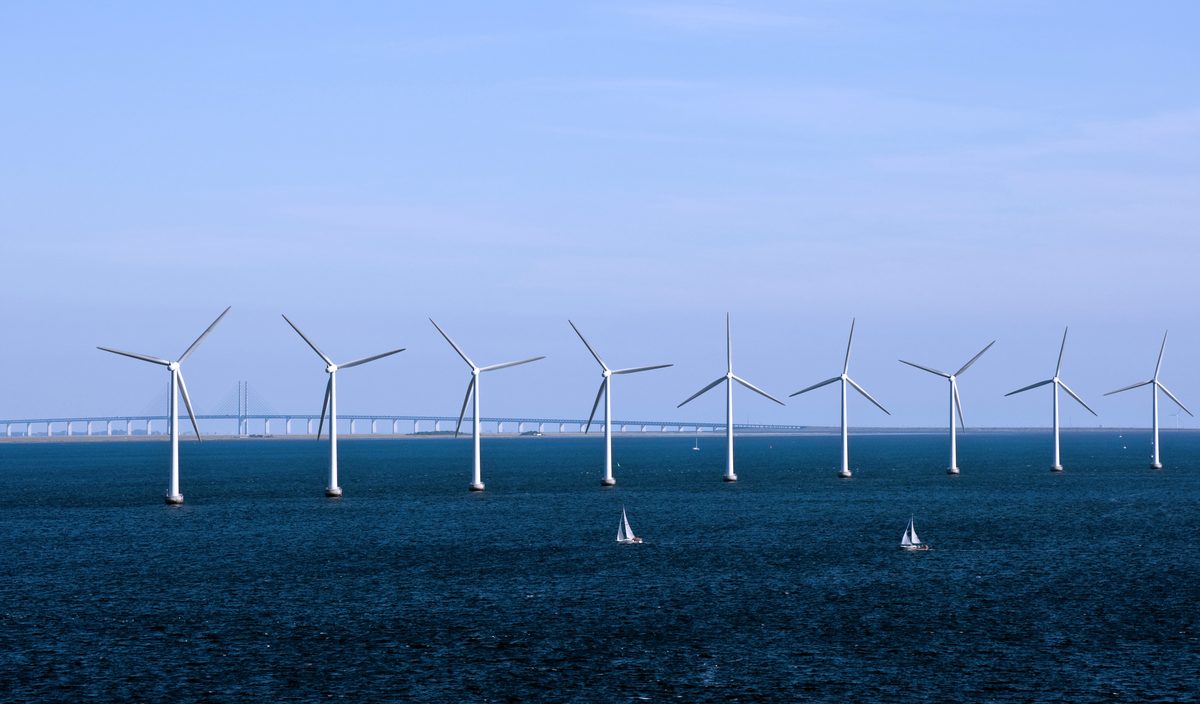
Photographs via Wikimedia Commons: Northern lights, Lofoten by Christoph Strässler, CC BY-SA 2.0 · Øresund wind farm by CGP Grey, CC BY 2.0. Unchanged apart from size.