Sustainability is the Nordic edge, not a cost
In most of Europe sustainability is a cost an owner pays to keep a building lettable. In the Nordics it is an inheritance: clean power, cold climate, strict codes and institutions that wrote the checklists. The rules that bind European capital, the taxonomy, the buildings directive and the disclosure regime, now convert that inheritance into rent, cheaper debt and a buyer at exit.
1. The inheritance: cleanest power in Europe
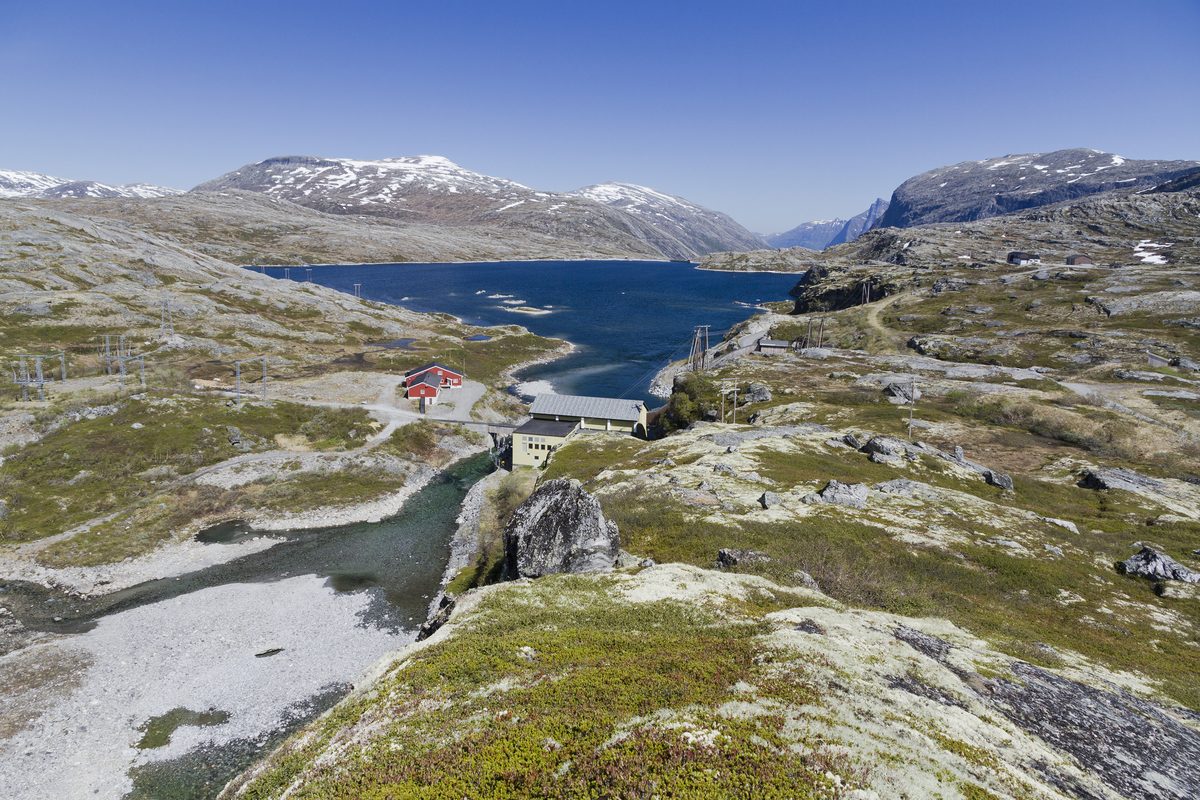
Norway produced a record 161.8 terawatt-hours in 2025, 89.9 per cent of it hydro and 8.6 wind, and exported 22.8 terawatt-hours net. Sweden generated 166.9 terawatt-hours, roughly 41 per cent hydro, 27 nuclear and 23 wind, which Ember scores as 99 per cent low-carbon, the highest share in the European Union, with power-sector emissions of 0.6 tonnes per person against an EU average of 1.3. Denmark took about 60 per cent of its production from wind, Finland 37 per cent from nuclear and 26 from wind.
Price follows supply. The average Norwegian household paid 141.7 øre per kilowatt-hour before support in 2025, and the northern zone averaged 2 to 10 øre a month for most of the year. Sweden's northern zones traded around 23 öre against 64 in Stockholm and 84 in the south. For an owner of buildings or a founder of an energy-intensive company, that is the lowest operating cost in Europe, and the lowest carbon footprint to report.
2. The rules that turn it into a price
Three European regimes now decide what a building or a company is worth to an institutional investor. The EU taxonomy's criteria for owning buildings require, for a building completed before 2021, an energy certificate of class A or a place in the top 15 per cent of the national stock, and for newer buildings a primary energy demand at least 10 per cent below the national near-zero threshold. A simplification adopted in January 2026 added a 10 per cent materiality threshold to the reporting, but left the criteria untouched.
The recast buildings directive requires all new public buildings to be zero-emission from 2028 and all new buildings from 2030, with minimum performance standards that lift the worst 16 per cent of non-residential stock by 2030 and 26 per cent by 2033. The disclosure regime for funds, SFDR, is being rewritten: the Commission's proposal of November 2025 replaces the article 8 and 9 labels with three product categories, and the Parliament voted its position in October 2026. The corporate reporting directive was cut back in March 2026 to companies with more than 1,000 employees. Norway adopted the taxonomy and SFDR into its own law in 2023 and is following the simplifications.
What has not changed is what the investors ask for. Storebrand's exclusion policy, updated in February 2026, removes companies with more than 5 per cent of revenue from coal or oil sands from every fund. KLP, Nordea and the Danish pension funds run comparable lists. The institutional due-diligence questionnaires, ILPA's framework and the PRI's climate module, ask for taxonomy alignment, principal adverse impact indicators and energy data per asset before a subscription is signed. A seller who cannot produce them sells to a smaller pool at a lower price.
3. What the market actually pays
The evidence is specific. Cushman & Wakefield measured a rent premium of 4 to 9 per cent for certified office buildings in Stockholm, depending on certification level, across about 2,300 leases in 250 buildings, with the largest premium outside the centre where three quarters of the space is certified. Castellum reports a green discount on bank loans of about 5 basis points a year and that green bonds are a requirement for some of its investors. Swedish Logistic Property's sustainability-linked loans with Nordea and Swedbank carry a 5 to 10 basis point discount tied to certification and energy targets.
The certification machine is at scale. Sweden Green Building Council issued 432 final certifications in 2025; Norway's Grønn Byggallianse counts 440 BREEAM-NOR buildings and more than 400 members; Storebrand's property portfolio is 89 per cent certified. Entra reports 52 per cent of 2025 revenue as taxonomy-aligned and publishes a green financing framework. Nordic ESG-labelled bond issuance reached 37 billion euros in the first half of 2025, 91 per cent of it green, and Danish issuers had 405 billion Danish kroner of sustainable bonds outstanding at the end of 2025, 7.9 per cent of the market. The buyer at exit, the lender at refinancing and the tenant at renewal all pay for the same thing.
The buyer at exit, the lender at refinancing and the tenant at renewal all pay for the same thing.
4. Where the thesis is the business
Sustainability is also a sector, and the Nordic record in it is mixed, which is useful to know. Norway's seafood exports reached a record 181.5 billion kroner in 2025, 73 per cent of it from aquaculture, and the ocean industries are where Nordic growth capital has its deepest roots. Carbon capture works: Northern Lights stored its first carbon dioxide in August 2025 and will reach at least five million tonnes a year in 2028. Green steel found its money: Stegra closed a 1.4-billion-euro round in April 2026 led by Wallenberg Investments.
Batteries did not. Northvolt's Swedish plants went to Lyten in February 2026; Morrow in Norway was declared bankrupt in May after 3.3 billion kroner of equity, most of it public. Offshore wind is slow: the Utsira Nord areas were awarded in February 2026 but first production is expected around 2035. Two Norwegian hydrogen projects were cancelled in 2025 and 2026 for lack of a commercial model. Nordic impact start-ups raised a record 650 million euros in 2024, more than half in climate and energy, and 36 per cent of all venture capital in the region goes to impact companies. The lesson for an investor is not to avoid the sector but to insist on the thing the failures lacked: a customer who pays before the subsidy does.
5. What a careful investor asks before subscribing
- For a building: the energy certificate and its date, the taxonomy test (class A or top 15 per cent, or 10 per cent below near-zero), the certification scheme and level, metered energy per square metre, and the plan for 2030.
- For a company: the revenue that is taxonomy-eligible and the share that is aligned, scope 1 and 2 emissions, the exclusion lists it would fail, and whether the customer pays before the grant does.
- For a fund or club deal: the SFDR category today and under the new rules, the principal adverse impact indicators it will report, and who signs the data.
- For all three: the power contract. In the Nordics it is the cheapest, cleanest line in the budget, and the one a buyer from outside will pay for.
About this note. Written by AIGAS with AI support and checked against the sources below, as of 1 November 2026. Official sources (central banks, statistics offices, supervisors) are separated from market research and press. Nothing here is investment advice, an offer or a solicitation. Investment decisions are made by investors with their own advisers, and regulated services are provided by licensed firms.
Sources
- Statistics Norway, electricity production 2025, 8 May 2026 (official)
- Statistics Norway, electricity prices 2025, 16 February 2026 (official)
- Energiföretagen Sverige, Energiåret 2025, 11 May 2026 (professional)
- Ember, Sweden electricity profile 2025 (professional)
- Finnish Energy, Sähkövuosi 2025, January 2026 (professional)
- Commission Delegated Regulation (EU) 2021/2139, taxonomy climate criteria (official)
- Directive (EU) 2024/1275, energy performance of buildings (official)
- Debevoise, review of the SFDR, 21 November 2025 (professional)
- HSF Kramer, Omnibus I directive published, February 2026 (professional)
- Finanstilsynet, sustainability reporting in Norway (official)
- Storebrand Asset Management, exclusion policy, 9 February 2026 (professional)
- ILPA, ESG Assessment Framework, updated 2024 (professional)
- Cushman & Wakefield, Office Snapshot Sweden autumn 2024 (professional)
- Castellum, a business case for sustainability, data at 31 December 2024 (professional)
- Swedish Logistic Property, sustainability-linked loans, 18 October 2024 (professional)
- Storebrand Livsforsikring, sustainability report 2025 (professional)
- Entra, annual report 2025 (professional)
- NordSIP, Nordic ESG bond issuance H1 2025, 29 August 2025 (media)
- Danmarks Nationalbank, sustainable bonds statistics, 17 February 2026 (official)
- Norwegian Seafood Council, seafood exports 2025, 6 January 2026 (professional)
- Equinor, first CO2 stored at Northern Lights, 25 August 2025 (professional)
- Equinor, Utsira Nord (professional)
- Lyten, acquisition of Northvolt Sweden completed, 26 February 2026 (media)
- Impact Europe, Nordic impact primer 2025, 25 July 2025 (professional)
Talk to us
Sponsors: send a short description of the project. Investors and partners: request access to the partner area.
Photographs via Wikimedia Commons: Holbuvatnet hydropower by Simo Räsänen, CC BY-SA 3.0 · Nærøyfjord by Cbliu, CC BY-SA 4.0. Unchanged apart from size.