
Why the window in the Nordics is open now
Norway's policy rate will stay near 4.5 per cent through 2027. Yields have repriced, leveraged and foreign buyers stand aside, and the equity gap sits with the sponsors. For capital that is careful and patient, that is an opening, not a warning.
1. The rate that stays
Most markets are waiting for lower rates. Norway is not getting them soon. Norges Bank raised its policy rate to 4.50 per cent on 25 September 2026, and its own projection in Monetary Policy Report 3/26 has the rate peaking at 4.60 per cent in the second quarter of 2027, staying around 4.5 through the year, and only reaching 3.5 per cent by the end of 2029. Inflation explains the patience: consumer prices rose 3.4 per cent in the year to September, core inflation 3.0, and wage settlements are running at 4.4 per cent. The bank does not expect to see its two per cent target before 2029.
The market prices an even higher path. The five-year NOK swap stood at 4.88 per cent on 30 October, the ten-year at 4.60, both roughly a full percentage point above a year earlier. Sweden sits at a policy rate of 1.75 per cent. The gap between the two currencies, 2.75 percentage points, is also the cost of hedging krone exposure for a Swedish investor, and it is the single biggest reason the krone has strengthened by about twelve per cent against both the euro and the krona in twelve months.
For an investor the consequence is simple. A Norwegian asset has to be bought at a price that carries today's cost of capital, not yesterday's. Assets that cannot are not being bought, and that is where the opportunity sits.
2. Who can buy, and who cannot
Transaction volume in Norwegian commercial property fell from 161 billion kroner in 2021 to 88 billion in 2025, and the research houses expect 84 to 88 billion for 2026. That is not a market in distress. It is a market where leverage no longer works. Prime office in Oslo yields 4.75 per cent against a five-year swap of 4.88: the yield gap that justified borrowed money is gone. Only two segments still carry debt comfortably, retail (big box 5.50 per cent, shopping centres 5.85) and logistics (5.25 to 5.50), and they are exactly where the buying has moved. Retail has become the largest segment by volume for the first time, above 25 per cent of the total.
The buyers are domestic and unleveraged: syndicates, pension and life insurers buying logistics, family-owned property companies. Foreign capital, which took 21 to 26 per cent of volume in 2020 to 2024, is down to 11 per cent in the first half of 2026, and the foreign names in this year's headlines are sellers. The banks are lending, with credit standards unchanged and margins drifting lower, around 157 basis points over NIBOR for a standard Oslo office loan, but they want roughly 40 per cent equity, and four of nine banks tell Norges Bank they see rising risk of interest-cover covenant breaches.
Put those facts together and the picture is one of a buyer's market for whoever has equity, discipline and time. Prices are set by the few who can pay cash, not by the many who used to borrow.
3. Where the gap sits
The gap is not in Oslo prime. It is in the regions and in the sponsor's balance sheet. Fully let retail parks with national anchor tenants in Vestfold, Telemark and Østfold trade at 6.5 to 7.5 per cent net, a premium of 75 to 150 basis points over the Oslo-area benchmark of 5.50. Secondary logistics carries 100 to 300 basis points more. The rent base is lower too, roughly 1,100 kroner per square metre in Telemark against 1,850 in central Oslo, which is what makes the yields possible without heroic assumptions.
The sponsors who own or want these assets have a common problem: equity after refinancing. Norwegian syndicates typically carry 25 to 50 per cent of a project's financing in equity, the number of property companies failing rose 29 per cent in the first nine months of 2026, and an estimated 40 billion kroner of property bonds are being refinanced across 2025 and 2026. A good building with a thin sponsor is the most common situation in the market right now. It is also the one where a prepared introduction between a sponsor and the right investor creates the most value.
Prices are set by the few who can pay cash, not by the many who used to borrow.
4. Growth companies: the thinnest market in the Nordics
The same logic holds for growth capital, only sharper. Norwegian early-stage companies raised about 170 million euros in 2025, against 1.2 billion in Sweden, the lowest in the Nordics relative to the size of the economy. The third quarter of 2026 saw only 612 million kroner raised across 19 private placements. The largest crowdfunding platform went bankrupt in March 2026. Public funding for innovation is being cut in the 2027 budget, and the state's own venture arm is being redirected into a fund-of-funds model.
Meanwhile the stock market has reopened. Oslo saw 18 listings in the first three quarters of 2026, more than in all of 2025, and over 90 per cent of equity raised goes through directed placements rather than public offerings. The gap sits in rounds of 10 to 60 million kroner, in companies that are real but too small for the brokers and too large for angels: ocean and seafood technology, industrial software, defence and robotics. For a club of private investors who do their own work, that is where the pricing is best.
5. What a careful investor does with this
Nothing on this page is advice, and the regulatory line in the Nordics is clear: anyone paid to introduce investors to an issue of shares is doing licensed work. That is why the process matters more than the thesis. A project should arrive prepared, with a memo, calculations where every assumption is visible, due diligence and a data room with an access log. The sponsor's own equity should give a real buffer, because the lesson of the last three years is that investors are safe only when the sponsor bears risk too. Subscription, know-your-customer checks and closing belong with a licensed investment firm, and the investor decides alone.
Done that way, the current market rewards patience. Yields of 6.5 to 7.5 per cent on let, indexed buildings, preference structures with control rights, and growth rounds priced by a thin market are available to capital that can wait for the rate to turn in 2028 and 2029. The window is open because most of the usual buyers cannot use it.

6. What could change the picture
- 5 November 2026: Norges Bank's next rate decision. The projection says hold; the market prices a higher path.
- 10 November: October inflation from Statistics Norway.
- 11 November: Norges Bank's Financial Stability Report 2026-2, with its reading of commercial property and bank exposure.
- 26 November: third-quarter national accounts.
- December: Monetary Policy Report 4/26 and the Storting's budget vote, which decides the 2027 cuts to innovation funding.
About this article. It is a summary of AIGAS's market report on Norway as of 31 October 2026, written with AI support and checked against the sources below. Official sources (central bank, statistics office, supervisor) are separated from market research and press in the full report. Nothing here is investment advice, an offer or a solicitation. Investment decisions are made by investors with their own advisers, and regulated services are provided by licensed firms.
Sources
- Norges Bank, rate decision 24 September 2026 (official)
- Norges Bank, Monetary Policy Report 3/26, rate path (official)
- Norges Bank, lending survey Q3 2026 (official)
- Statistics Norway, consumer price index September 2026 (official)
- Finanstilsynet, Financial Outlook June 2026 (official)
- Entra, consensus report Q3 2026 (market)
- DNB Næringsmegling, Markedspuls, October 2026 (market)
- Malling & Co, retail sector report September 2026 (market)
- CBRE, Investment Norway Q2 2026 (market)
- Colliers, Nordic investment market H1 2026 (market)
- UNION, bank survey, margins and equity requirements (market)
- NVCA, activity survey 2025, venture and growth capital (market)
The full report
Thirty pages on rates, the property market, the capital side, regulation, regional segments and growth capital, with 277 sources. Available to sponsors, investors and partners on request.
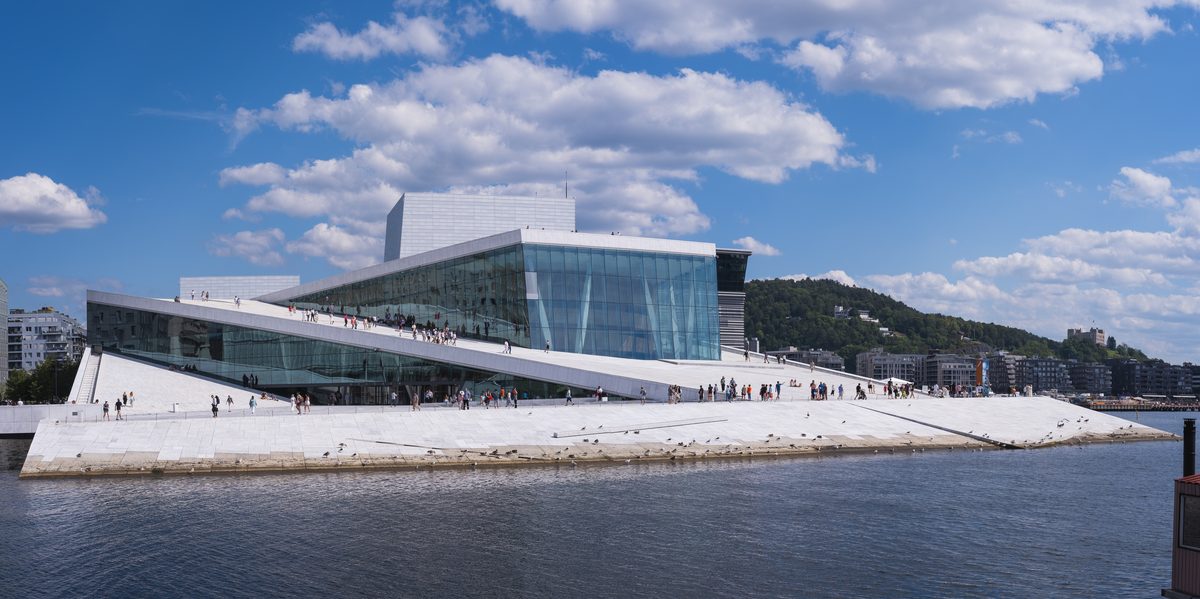
Photographs via Wikimedia Commons: Oslo, Pipervika at sunset by Geir Hval (MacWhale.eu), CC BY-SA 4.0 · Oslo Opera House by Christian David, CC BY-SA 4.0 · Reine panorama by Wolfgang Hägele, CC BY-SA 4.0 · Nærøyfjord by Cbliu, CC BY-SA 4.0. Unchanged apart from size.